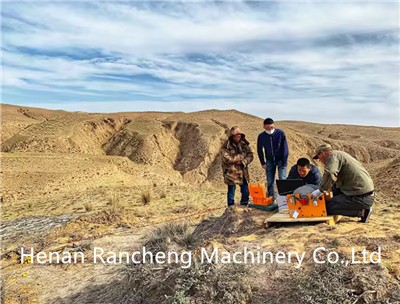
In modern subsurface exploration, the shift from manual sampling to high-accuracy digital data acquisition has significantly improved operational efficiency and data reliability. Borehole logging equipment plays an important role in this process by helping engineers better understand actual subsurface conditions during drilling operations.
For professionals involved in water well construction, mineral exploration, geothermal projects, and geotechnical investigations, understanding the operational principles of modern geophysical equipment is essential to obtaining consistent, reliable survey data.
This guide provides a professional overview of deploying a modern digital logging platform-represented by the RCQ-2D system-and explains how to optimize geophysical survey equipment for stable field performance and accurate data acquisition.
The Role of Geophysical Equipment in Modern Subsurface Mapping
Traditional drilling methods provide physical samples such as cuttings and cores, but these materials may become displaced or mixed during drilling operations. Modern borehole logging equipment solves this problem by measuring subsurface physical properties directly inside the borehole.
Common measurements include:
- Electrical resistivity
- Natural gamma radiation
- Fluid temperature
- Borehole diameter
- Borehole deviation
By using integrated geophysical survey equipment, operators can:
- Identify aquifer boundaries with measurable data
- Evaluate lithological transitions in real time
- Assess borehole conditions before casing and grouting operations
- Improve the accuracy of geological interpretation

Technical Setup and Installation Protocol
The quality of geophysical logging data depends heavily on proper equipment installation. Whether using a standalone logging system or an integrated platform such as the RCQ-2D, maintaining correct setup procedures is critical for reducing signal interference and preventing equipment failure.
1. Surface Infrastructure Deployment
The surface system of geophysical equipment usually includes a digital controller and a mechanized winch system.
Winch Positioning
The winch should be installed on a stable and level surface, ideally 3 to 5 meters away from the borehole opening. Proper positioning helps maintain a suitable cable fleet angle and reduces uneven cable tension during operation.
Power Supply Management
Digital logging systems require a stable DC power source. In field environments, a regulated 12V battery system is generally preferred because it minimizes electrical noise commonly produced by portable AC generators.
2. Probe Integration and Waterproofing
The downhole probe is one of the most sensitive components of borehole logging equipment.
Mechanical Connection
Before deployment, operators should carefully inspect all cable connections and O-ring seals. Poor waterproofing may allow fluid intrusion at deep drilling depths, potentially damaging internal sensors and electronic components.
Zero-Depth Calibration
Before lowering the probe into the borehole, a zero-depth calibration should be completed by aligning the probe reference point with the borehole collar. Proper calibration ensures accurate depth indexing during data acquisition.
3. Grounding and Noise Reduction
Electrical noise is one of the most common factors affecting geophysical survey accuracy.
To improve signal stability, the grounding electrode should be installed in moist soil near the winch system. Proper grounding helps reduce interference during resistivity and spontaneous potential measurements, especially in water-bearing formations.
Without sufficient grounding, collected data may become unstable and difficult to interpret accurately.
Operational Standards for High-Precision Logging
After installation is completed, the operational stage begins. During logging operations, maintaining consistent acquisition parameters is more important than maximizing operating speed.
Controlled Descent and Retrieval Speed
For systems such as the RCQ-2D, a logging speed of approximately 8 to 12 meters per minute is generally recommended.
Importance of Stable Logging Speed
Excessive logging speed may reduce curve resolution, particularly for natural gamma measurements where the sensor requires sufficient response time.
Inconsistent cable movement can also create depth correlation errors, affecting the reliability of the final geological interpretation.
Real-Time Curve Monitoring
Modern geophysical equipment allows operators to monitor survey curves in real time during the logging process.
Operators should pay attention to:
Repeatability
If abnormal readings appear within a specific interval, a repeat log over the same section is recommended to verify data consistency.
Signal Stability
Signal-to-noise ratio should remain within the manufacturer's recommended operating range throughout the survey process. Stable signals are essential for producing reliable geological data.

Application Areas of Borehole Logging Equipment
Modern geophysical survey equipment is widely used across multiple drilling and subsurface investigation industries.
Hydrogeological Investigation
In water well drilling projects, logging tools help identify productive aquifers and evaluate groundwater conditions.
Using resistivity and spontaneous potential sensors, engineers can distinguish:
- Freshwater and saline water zones
- Permeable sand formations
- Impermeable clay layers
This information helps improve well design and screen placement efficiency.
Geotechnical and Mineral Exploration
In mining and infrastructure projects, borehole logging equipment is commonly used to evaluate rock conditions and detect fractures or structural discontinuities.
Under these working conditions, equipment durability becomes especially important. Logging systems must withstand:
- High borehole pressure
- Abrasive drilling fluids
- Long-duration field operation
Reliable equipment performance directly affects project efficiency and operational cost control.
Geothermal Energy Projects
As geothermal development continues to expand, logging systems are increasingly used for monitoring underground temperature distribution and formation conditions.
Integrated systems such as the RCQ-2D can support high-temperature fluid sensors, providing important thermal data for geothermal well evaluation and heat-exchange system design.
Conclusion
Selecting suitable borehole logging equipment and following proper operational procedures are essential parts of modern drilling operations.
By maintaining accurate installation practices and stable acquisition parameters, operators can improve data reliability and support more accurate geological analysis.
For engineering contractors and drilling companies in European and American markets, integrated geophysical survey equipment such as the RCQ-2D provides a practical solution for efficient and reliable subsurface investigation.
When geophysical equipment is properly installed and operated, the collected data becomes a dependable basis for drilling decisions, geological interpretation, and long-term project planning.